
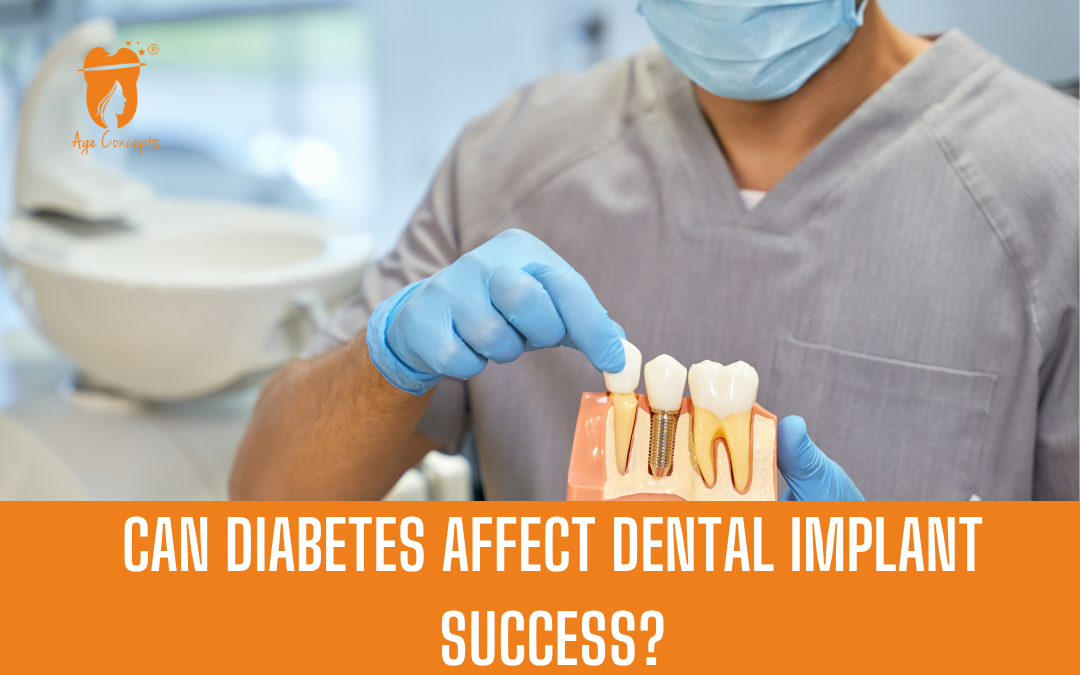
Yes, diabetes can affect how well a dental implant takes, though the deciding factor is blood sugar control rather than the diagnosis itself. When diabetes is well managed, implant survival runs close to the rates seen in people without it, somewhere around ninety-five percent. Poorly controlled diabetes is the real problem, since high blood sugar slows healing, raises the risk of gum infection around the implant, and makes failure more likely. Put simply, a diabetic patient with steady numbers is usually a perfectly good candidate.
According to Dr. Swapnil Bhagwat at Age Concepts, a dental clinic in seawoods, “I rarely turn a diabetic patient away from implants, what I do is check their control first, because an implant placed on stable blood sugar behaves almost exactly like one in a non-diabetic mouth.”
How does diabetes affect dental implant success?
The effect comes down to healing, and healing is exactly what high blood sugar interferes with.
- Slower healing: raised glucose hampers the way bone knits around the implant, so osseointegration can take longer or, in poorly controlled cases, fail to hold at all.
- Infection risk: diabetes blunts the body’s defences, which leaves the gum around an implant more prone to the inflammation known as peri-implantitis.
- Bone loss: the higher someone’s HbA1c sits, the more marginal bone tends to slip away from around the implant over the years.
- Control is everything: studies keep finding that well-managed diabetes behaves much like no diabetes at all, while uncontrolled sugar is where the failures cluster.
None of this rules anyone out, and most diabetic patients with reasonable control go on to have successful dental implants.
How can diabetic patients improve implant success?
A few practical steps tilt the odds firmly back in your favour.
- Steady your HbA1c: getting blood sugar into a stable range before surgery gives the implant the best possible start, ideally under the eight percent mark.
- Keep it clean: thorough brushing and flossing around the implant matters even more here, since infection is the main thing that derails diabetic cases.
- Expect patience: healing may simply need a little longer, so the timeline is sometimes stretched rather than rushed.
- Stay in touch: regular reviews catch any early gum trouble while it’s still easy to reverse, well before it can threaten the implant.
Since the healing stretch carries the most weight for diabetic patients, it’s worth knowing what a smooth implant recovery actually looks like day to day.
Why Choose Dr. Swapnil Bhagwat to Know About Diabetes Effect on Dental Implant Success?
Dr. Swapnil Bhagwat is an implantologist with over 15 years of clinical experience and a Gold Medal from MARDC, Pune, and he’s placed implants for plenty of diabetic patients by planning each case around their control rather than around the label.
A diabetic implant case here starts with checking that blood sugar is in a sensible range, carries on with careful surgery and close follow-up, and only proceeds when the odds genuinely favour a lasting result, which they usually do once control is in place.
Call +91 9860782782 to book your consultation.
Schedule a consultation with Age Concepts to know whether Diabetes Affects Dental Implant Success?
FAQ's
1. Can diabetics get dental implants?
Yes, especially when blood sugar is well controlled before and after surgery.
2. Does diabetes increase implant failure risk?
Mainly when poorly controlled, since high blood sugar slows healing and invites infection.
3. What HbA1c level is safe for implants?
Generally below eight percent, though your dentist and physician decide together.
4. Do implants heal slower in diabetics?
Often a little, so the healing timeline may be extended rather than rushed.
Disclaimer
This content is for general information only and is not a substitute for professional dental advice, diagnosis, or treatment.