
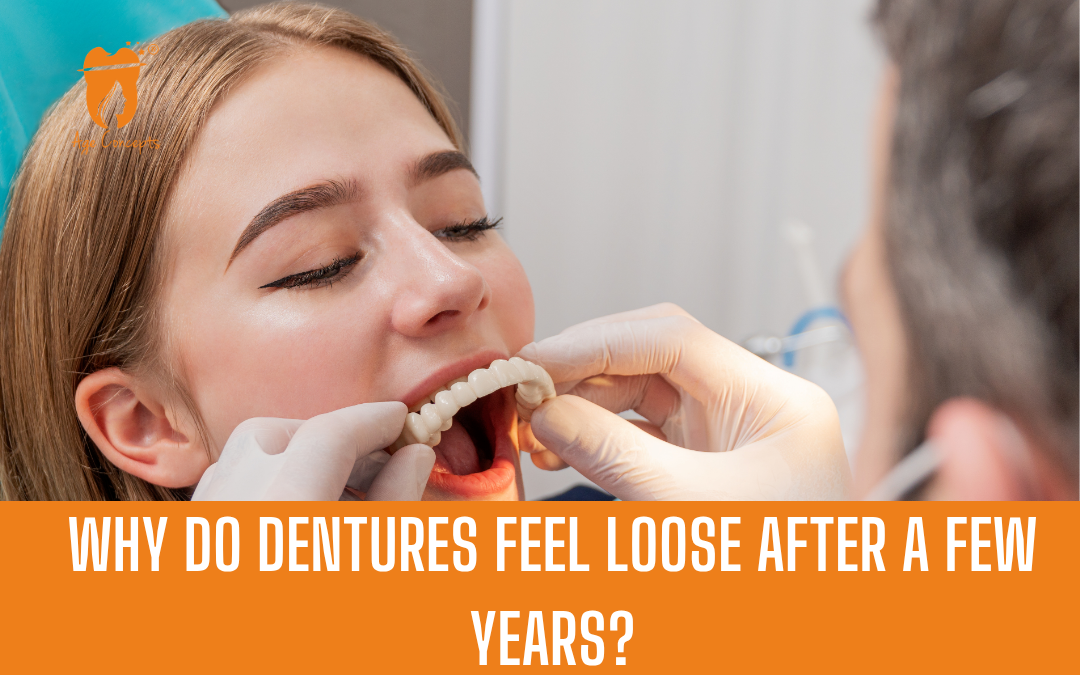
Dentures feel loose after a few years mainly because the jawbone underneath them keeps shrinking. Once the natural teeth are gone, the ridge of bone that held them slowly resorbs, since nothing is stimulating it anymore, and wearing a denture tends to speed that along. So a plate that fits snugly at first gradually stops matching the changed shape of the gum and bone beneath it. The denture hasn’t really changed, your mouth has.
According to Dr. Swapnil Bhagwat at Age Concepts, a dental clinic in seawoods, “people assume the denture has worn out, but nine times out of ten it’s the ridge underneath that’s melted away, and the plate is simply sitting on a shape that no longer exists.”
Why do dentures loosen over time?
Most of the looseness traces back to slow changes in the bone and gum that a fixed denture can’t keep up with.
- Bone shrinks: with no tooth roots left to stimulate it, the jaw ridge resorbs year after year, and the denture loses the firm base it was moulded to.
- Gums change: the soft tissue over that ridge flattens and toughens as well, which quietly alters the snug seal a denture depends on.
- Suction fades: as the fit drifts, the gentle vacuum that holds an upper plate up weakens, so it starts to drop or click.
- Wear adds up: years of chewing grind down the denture’s biting surface and acrylic, throwing the bite off and loosening the grip further.
Because the bone keeps receding, many people eventually anchor the denture to dental implants, which hold it firm and slow that bone loss right down.
How can a loose denture be fixed?
The right fix depends on how far the ridge has changed, and there’s usually a sensible option at each stage.
- Relining: a fresh layer of material is added to the fitting surface so the base matches the reshaped ridge again, which is the quickest route.
- Rebasing: when the teeth are still good but the base is worn out, the whole base gets rebuilt while those teeth are kept.
- Remaking: after enough years and bone change, a brand new denture taken from current impressions simply fits better than patching the old one.
- Implant support: a few implants can lock a loose denture in place, the most stable answer and the one that best protects whatever bone is left.
If implants end up being the route, it helps to know what the healing involves, so a clear picture of implant recovery is worth having before you decide.
Why Choose Dr. Swapnil Bhagwat to fix Loose Dentures?
Dr. Swapnil Bhagwat is an implantologist with over 15 years of clinical experience and a Gold Medal from MARDC, Pune, and he’s restabilised plenty of loose dentures, whether through a simple reline or by anchoring them onto implants.
The first step here is always to work out why a denture has loosened before recommending anything, so you’re offered the least invasive fix that genuinely lasts rather than pushed straight toward the priciest one.
Call +91 9860782782 to book your consultation.
Schedule a consultation with Age Concepts to fix Loose Dentures Problem?
FAQ's
1. Why has my denture suddenly become loose?
Usually the jawbone beneath it has shrunk, changing the fit over time.
2. Can a loose denture be tightened?
Yes, relining or rebasing can refit it, and implants can anchor it firmly.
3. How often do dentures need relining?
Roughly every two to three years, though it varies with bone change.
4. Do implants stop denture-related bone loss?
Largely yes, since implants stimulate the bone the way natural roots did.
Disclaimer
This content is for general information only and is not a substitute for professional dental advice, diagnosis, or treatment.