
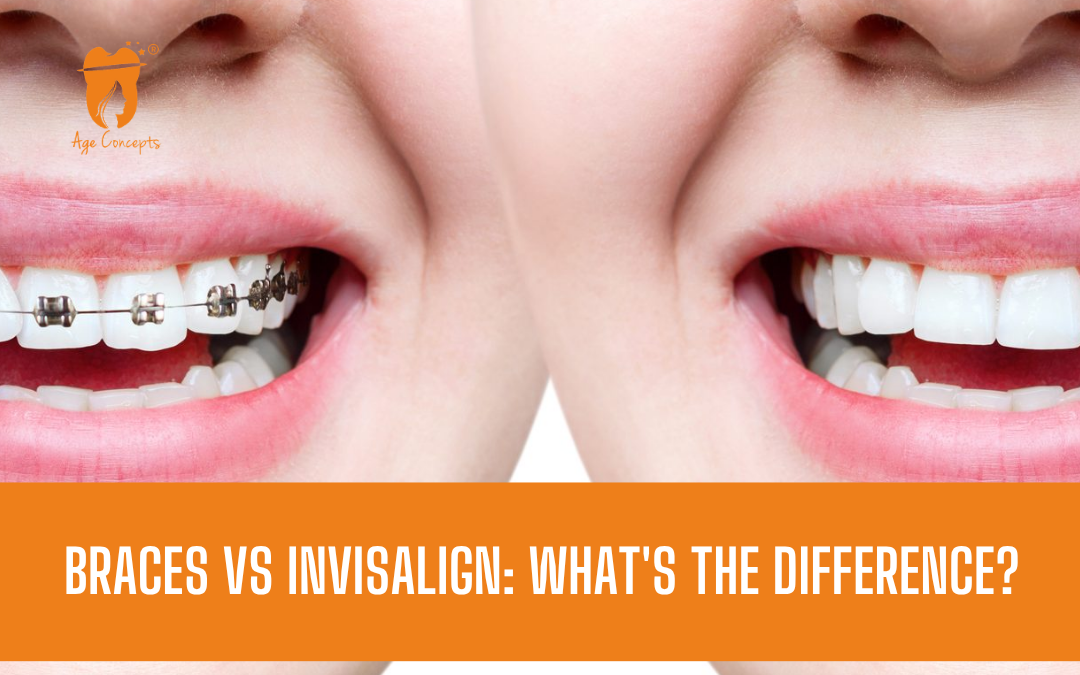
Two ways to fix crooked teeth, two very different daily routines. Braces are metal brackets stuck to your teeth with a wire running through, tightened every month. Invisalign? A set of clear plastic trays you swap at home, week after week, till the teeth land in place.
According to Dr. Sumedh Deshpande, dental clinic in Seawoods, Navi Mumbai, “Aligners work for most mild to moderate cases. For deep bite or rotation-heavy cases, fixed braces still do a better job.”
Here’s how they actually compare:
Feature | Traditional Braces | Invisalign |
What it is | Metal or ceramic brackets, glued on | Clear plastic trays, swappable |
Can you see it | Yes, especially metal type | Most people won’t notice |
Comes off | Stays on the whole time | Comes off for meals and brushing |
Time | Usually 12 to 24 months | Usually 12 to 18 months |
Clinic visits | Once a month, like clockwork | Every 6 to 8 weeks |
Eating | Stay away from sticky and hard food | No restrictions when trays are out |
Works best for | Severe crowding, jaw misalignment | Mild to moderate alignment cases |
Daily care | Brush carefully around brackets | Rinse trays, brush normally |
What Are Traditional Braces and How Do They Work?
Brackets glued to each tooth. A wire runs through them. The orthodontist tightens the wire each month, and your teeth slowly shift into line. Takes time. Works well.
- Parts: Brackets glued to teeth, archwires through the brackets, tiny rubber ties holding the wire in place. Sometimes elastics between jaws if the bite needs it.
- How they look: Metal ones are obvious. Ceramic ones are tooth-colored and look softer in photos, but they chip if you bite ice or pen caps. Lingual ones go behind the teeth, costly but invisible.
- Food: Sticky and hard food becomes off-limits. So no chikki, no whole apples, no popcorn for a year and change. Cut things smaller. You adapt.
- Visits: Every month. Wire tightening, elastic changes, maybe a bracket re-glue if one popped off chewing something you weren’t supposed to.
Heavy lifting cases, severe overbites, growing kids whose jaws are still shifting, these go to traditional braces, because that level of control is hard to match with plastic trays.
How Is Invisalign Different from Braces?
Invisalign is a set of clear plastic trays, made from a 3D scan of your bite. You wear each tray for a week or two, then swap to the next. Each one pushes teeth a tiny bit closer to where they should be.
- Discreet: Trays sit flush over the teeth. Hard to spot unless someone leans in. That’s the main reason people book Invisalign treatment over fixed braces.
- Removable: Take them out, eat what you like, put them back. Brush properly while the trays are out. No food stuck in metal, no broken bracket in the middle of dinner.
- Comfort: Smooth plastic edges, no wires snapping in your mouth at 2am. Fresh trays feel tight for a day, then your teeth settle.
- Discipline: This is the catch. You have to wear them 20 to 22 hours a day. Forget for a week, and the next tray won’t fit. Some people just can’t keep up.
Both straighten teeth. The real question is your case complexity, plus whether you can keep trays in for 22 hours a day.
Why Choose Age Concepts for Braces vs Invisalign in Navi Mumbai?
Dr. Sumedh Deshpande plans every orthodontic case at Age Concepts the same way. Digital intraoral scan first, then a face scan, sometimes CBCT if the jaws need a closer look. The full plan gets mapped before a single bracket or tray ships to the lab.
You walk in, get scanned, leave with a clear timeline and cost. The bill is on paper from day one, so nothing gets sprung on you at month 14.
Braces or Invisalign? Your teeth decide that, not a brochure. One scan at Age Concepts gives you a clear timeline and an honest cost from day one.
FAQ's
Are braces faster than Invisalign?
Depends on the case. Both usually run 12 to 24 months for complete correction.
Can adults use Invisalign?
Yes. Many adults pick aligners because they’re discreet during work meetings and meals.
Do braces hurt more than Invisalign?
Braces ache for a day after tightening. Aligners feel like steady mild pressure.
Which option suits complex bite issues?
Severe rotations and jaw mismatches usually need fixed braces. Aligners can’t reach that far.
References
- American Association of Orthodontists — orthodontic treatment overview
- NIH NIDCR — malocclusion information