
You got the filling done expecting the pain to go away. Instead it’s been a week and your tooth is still bothering you, maybe not as bad as before, but enough that you keep poking at it with your tongue wondering what’s wrong. This is one of the most common things patients walk into a dental clinic in Navi Mumbai asking about, and honestly, it’s rarely as alarming as it feels.
Sometimes a tooth filling hurts after a week simply because the tooth hasn’t fully settled yet. Other times there’s something underneath that actually needs attention. Dr. Swapnil Bhagwat, who handles Conservative Dentistry and Endodontics at Age Concepts, sees this almost every week and walks us through what’s usually behind it.
Is It Normal If Your Tooth Filling Hurts After a Week?
A bit of soreness right after a filling, sure, that’s expected. But hitting the seven-day mark and still feeling it makes people nervous, and fair enough. It usually comes down to two things – either it’s mild lingering sensitivity that’s slowly fading out, or there’s something underneath that didn’t settle the way it should have.
What kind of pain it is tells you a lot. A quick zing when you drink something cold that disappears in a couple of seconds? Probably fine. A dull ache that won’t go away, or sharp pain when you bite down? That’s the kind worth getting checked.
Why Filled Teeth Sometimes Still Hurt After a Week
The nerve hasn’t calmed down yet
Deep cavities mean the filling sits close to the nerve, and nerves don’t always settle quickly. This can drag on for one, sometimes two weeks before it fully eases off.
The bite is sitting too high
This one’s sneaky. If the filling is even a fraction taller than it should be, every bite puts extra pressure on that one spot. It feels like the tooth itself is the problem when really it’s just the height that needs adjusting.
The cavity was closer to the nerve than expected
Sometimes during the procedure, the decay turns out to be deeper than it looked on the X-ray. The nerve gets irritated, and if it stays inflamed, a root canal might end up being the next step.
It’s actually the tooth next to it
Pain doesn’t always stay where it starts. A neighbouring tooth can be the real source while the filled one takes the blame.
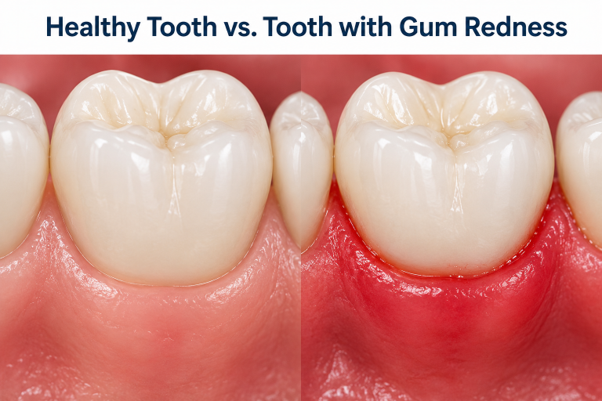
The gums around it are irritated
If the filling runs slightly into the gum line, that tissue can stay tender longer than the tooth itself does.
Dr. Swapnil Bhagwat puts it simply: “Mild sensitivity at the one-week point isn’t unusual, especially with deep fillings. What worries me is when patients tell me it’s getting worse instead of better, or it’s keeping them up at night. That’s not something to sit on. Get it looked at.”
When This Stops Being Normal
A few signs mean it’s time to stop waiting and book a visit:
- Pain that’s increasing instead of fading, a week in
- Throbbing that wakes you up
- Swelling near the treated tooth
- A bad taste or any discharge around the filling
- Pain that lingers a full minute or more after hot or cold food
- The filling feels loose or cracked
These usually point to pulpitis, an infection, or a filling that just needs to be redone – not things you want to diagnose yourself.
What You Can Do While You Wait It Out
If things are mild and not getting worse:
- Skip chewing directly on that tooth for a few more days
- Go lukewarm with food and drinks instead of extreme hot or cold
- Try a sensitivity toothpaste
- Stay away from nuts, ice, anything hard
- Keep brushing gently around it, don’t avoid it out of fear
If it hasn’t eased up in 10-14 days, or it’s getting worse before that, don’t keep waiting.
Still got that nagging twinge a week later? Might be worth letting someone actually look instead of guessing.
How a Dentist Actually Figures Out What's Wrong
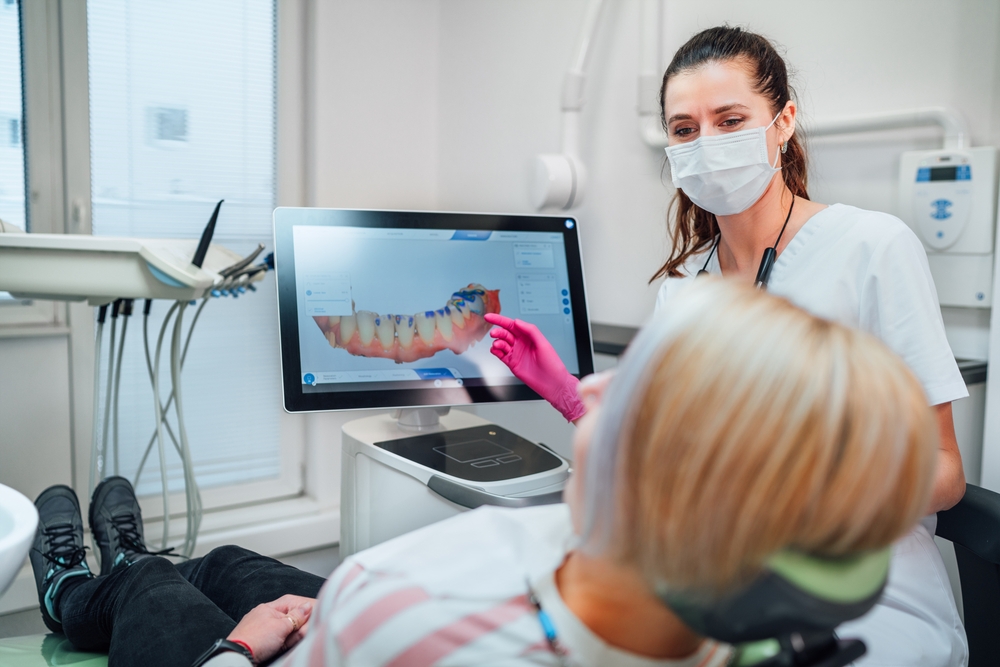
It’s usually a quick process. Checking the bite for a high spot, tapping the tooth to see how the nerve reacts, sometimes an X-ray to see what’s happening under the surface. At Age Concepts, the digital scanner and CBCT imaging make this part faster and a lot more precise than guesswork.
Depending on what they find, it could be something as small as filing down the filling a bit, or it could mean a root canal if the nerve’s actually involved.
Can a Filling Just Fail That Quickly?
It happens, just not often. Contamination during the procedure, a bite that wasn’t adjusted right, or a cavity that turned out deeper than expected – any of these can cause early trouble. It’s part of why follow-ups matter for deep fillings, so small issues get caught before they turn into bigger ones, like needing a crown down the line.
Conclusion
A tooth that’s still sore a week after a filling can feel like a red flag, but more often than not, it’s just the tooth taking its time to settle. What matters is whether the pain’s easing or building – that tells you whether to wait or get it checked. If it’s bothering you longer than it should, the team at Age Concepts in Seawoods, Navi Mumbai can take a look and tell you exactly what’s going on, no guesswork needed.
FAQ's
1. Is it normal for a tooth to still hurt a week after a filling?
2. How long does this kind of pain usually last?
3. Can a high filling really cause this much pain?
4. Does this always mean I'll need a root canal?
5. When should I actually go see someone?
References
- Cleveland Clinic: Tooth Filling
- American Dental Association: Restorative Dentistry
- NHS UK: Fillings
Disclaimer: The information shared in this content is for educational purposes only and not for promotional use.