
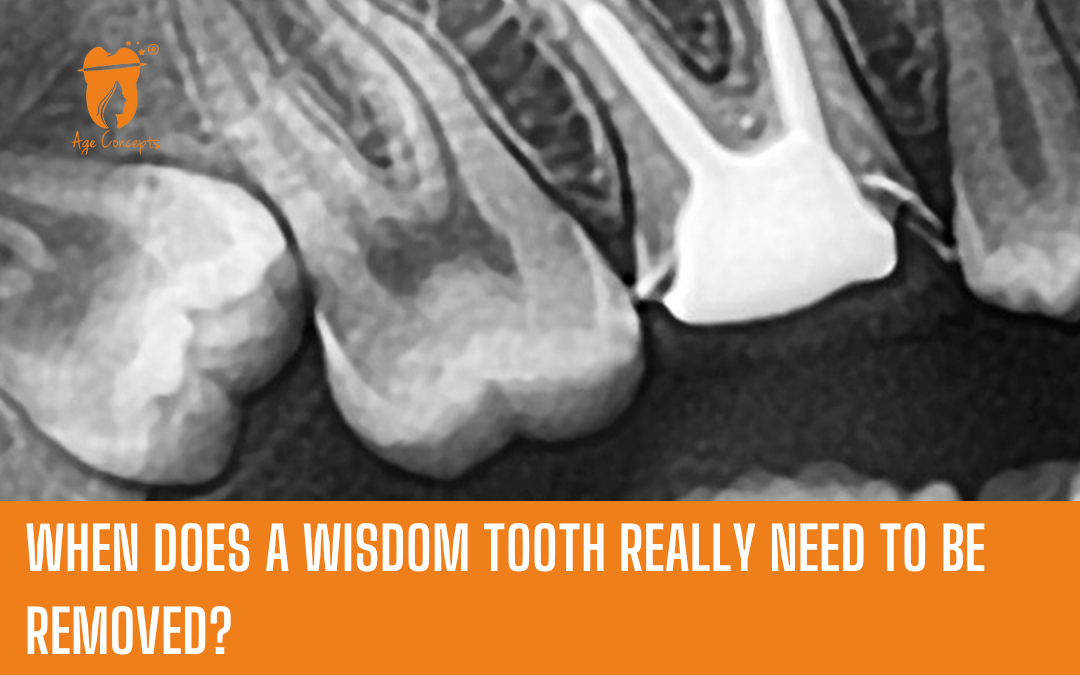
A wisdom tooth has to come out when it stops behaving, when it gets stuck halfway through the gum, rots away because the brush can’t reach it, keeps getting infected, or starts shoving the molar in front of it out of place. Removing it is rarely about the tooth itself, it’s about damage control for the rest of the jaw. Plenty of people keep their wisdom teeth for life and never think about them again. Others end up with one bad night of throbbing pain that finally sends them to a dentist. The cleaner version of this story is the one where the problem gets caught early, before the molar next door starts paying the price.
Dr. Swapnil Bhagwat says, “Honestly, if a wisdom tooth is in the right place and stays clean, I leave it alone, but once it starts trapping food or waking patients up at 2am, every week of waiting after that just makes my job harder and theirs more painful.”
When Is Wisdom Tooth Removal Actually Necessary?
The reason wisdom teeth cause so much trouble is space, or rather the lack of it. Modern jaws are smaller than they used to be, which leaves these last molars with nowhere proper to come in. When that happens, the tooth goes in whichever direction it can, sideways into the next tooth, half out and half stuck under the gum, or pressing against the second molar at an angle that ruins both. That’s the point where things stop being mild.
- Impaction is what happens when the tooth gets stuck trying to break through the gum, and the gum flap left on top becomes a magnet for swelling, throbbing pain, and infections that keep returning every few months
- Cavities show up fast on half-erupted wisdom teeth because there’s no way for a brush to actually reach the back face, and once the decay sets in, it tends to crawl into the healthy molar sitting next to it
- Pressure on adjacent teeth causes crowding, shifting, and sometimes root damage to the molar in front, which is the second most common reason for extraction
- Pericoronitis is the medical term for the gum infection that builds up under that loose flap of tissue covering a half-erupted wisdom tooth, and most patients describe it as a dull soreness that flares into proper pain every couple of months
A clinical evaluation at our dental clinic in Seawoods, Navi Mumbai usually identifies whether a wisdom tooth needs removal within a single visit using a panoramic X-ray.
Can a Wisdom Tooth Stay If It's Not Causing Pain?
Yes, sometimes. If the tooth came in fully, sits in line with the one above or below it, and you can actually brush around it without trouble, there’s no reason to put a patient through surgery. Healthy wisdom teeth get extracted far more often than they should, and that’s something I push back on when patients come in asking for removal “just to be safe”. The decision should come down to position, hygiene access, and what the X-ray shows about the molar in front.
- Fully erupted wisdom teeth that line up properly with the opposite tooth and stay easy to brush can usually be kept without any concern
- Partially erupted teeth with a gum flap on top are flagged for removal almost always, because the area underneath is impossible to clean and infection becomes a matter of time
- Sideways or angled wisdom teeth seen on X-ray are recommended for removal even without pain, since they’re slowly damaging the molar in front
- Healthy wisdom teeth in older adults are sometimes left alone if surgery would carry more risk than the tooth itself does, particularly in patients over 35
For patients whose wisdom tooth needs surgical removal due to impaction or angled positioning, our oral surgery team at Age Concepts handles complex extractions with minimal swelling and faster recovery.
Why Choose Age Concepts for Wisdom Tooth Removal in Navi Mumbai?
Dr. Swapnil Bhagwat, Age Concepts in Seawoods, Navi Mumbai, is led by 15 years of clinical work span training in Mumbai, New York, and Germany. Wisdom tooth cases here begin with a panoramic X-ray and an honest conversation about whether removal is actually needed, not a default recommendation. The surgical approach focuses on minimal tissue disruption, careful root sectioning where required, and a recovery plan that gets patients chewing comfortably within a week. What keeps patients across Navi Mumbai coming back is the same thing that makes the consultations longer than average, the willingness to talk through every option before reaching for the forceps.
📞 +91 9860782782.
Not every wisdom tooth needs to go. One visit at Age Concepts tells you if yours really does – an honest answer, backed by an X-ray.
FAQ's
1. Do all wisdom teeth need to be removed?
No, and this is something I find myself explaining a lot, healthy wisdom teeth that sit cleanly and stay easy to brush can be kept for life, while removal is only really needed for the ones causing trouble.
2. Is wisdom tooth removal painful?
The extraction itself is done under local anaesthesia so you won’t feel pain during the procedure, though it’s normal to have some swelling and tenderness for two to three days afterwards that’s easily managed with prescribed medication.
3. How long does recovery take after wisdom tooth extraction?
Most patients are back to eating normally inside a week, with the gum tissue fully healing over two to three weeks depending on whether the tooth was impacted or came out cleanly.
4. What happens if I don't remove an impacted wisdom tooth?
Leaving an impacted wisdom tooth in place tends to lead to repeat infections, decay in the molar in front of it, and in some cases a fluid-filled cyst forming around the buried tooth that needs more complex surgery to clear.
References
- American Dental Association, Wisdom Teeth Removal Information
- National Library of Medicine, Indications for Third Molar Extraction: A Systematic Review