
Blood from gums while brushing is one of the most common reasons people walk into a dental clinic in Navi Mumbai, and most of the time it isn’t the brush that’s the villain. It’s the body waving an early flag. Gums that bleed at the slightest touch are usually inflamed, and that inflammation almost always traces back to plaque sitting along the gum line longer than it should. The blood looks alarming. The cause, in most cases, is fixable. Dr. Swapnil Bhagwat, who leads the team at Age Concepts and works across general and surgical dentistry, points out that bleeding gums are rarely a brushing accident and far more often a sign worth reading early.
Dr. Swapnil Bhagwat says, “When someone tells me their gums bleed every morning, I don’t tell them to brush softer, I ask how long it’s been happening, because a week of bleeding is plaque, but months of it is a conversation about gum disease nobody wanted to have yet.”
What Actually Causes Bleeding Gums?
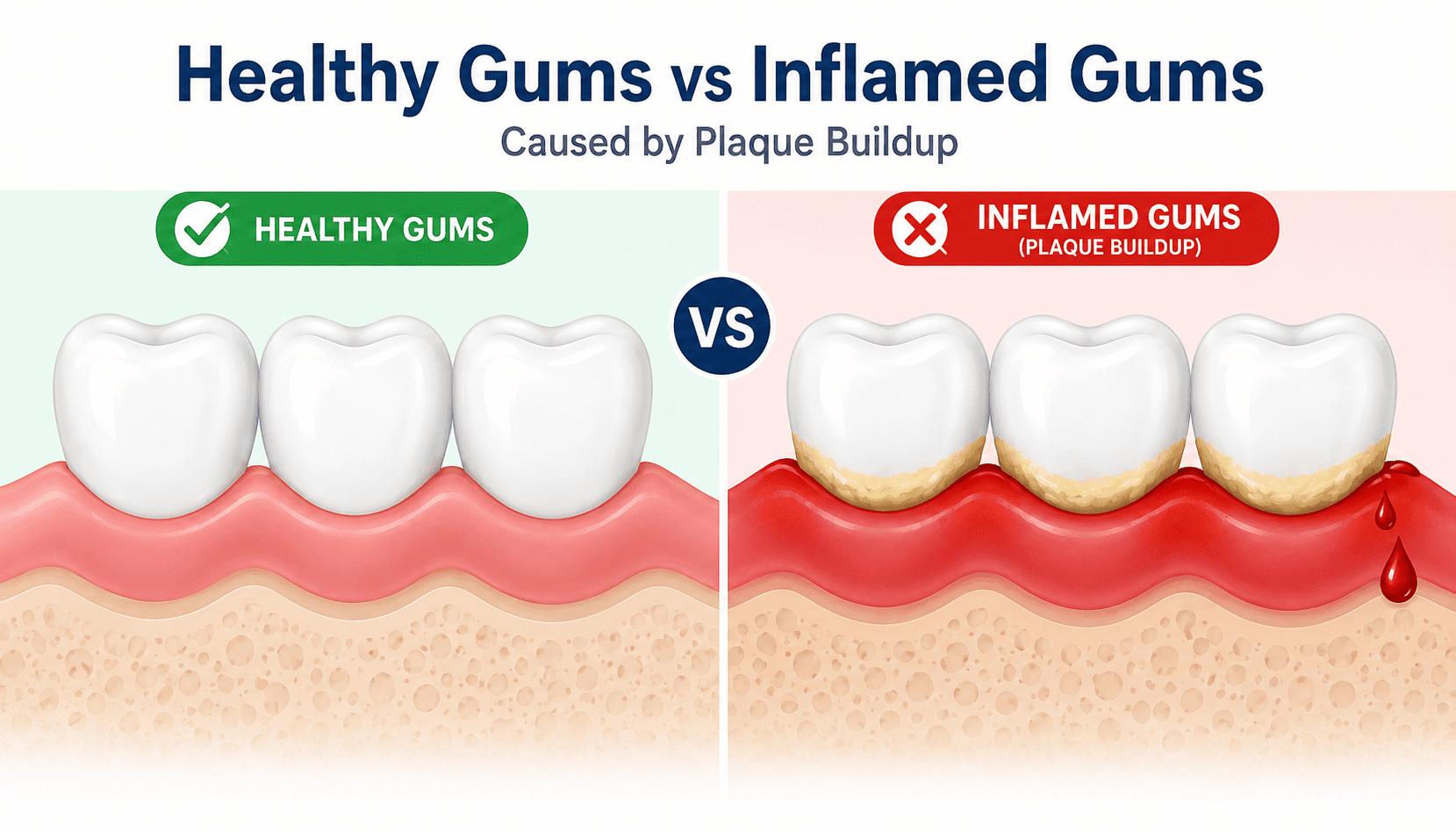
Bleeding starts when the gum tissue gets irritated and the tiny blood vessels near the surface swell up. Once they’re inflamed, even gentle pressure pops them. The trigger sitting underneath is almost always plaque, that soft film of bacteria that hardens into tartar if it stays put. But it isn’t the only reason, and lumping every bleeding gum into one cause is exactly how people end up treating the wrong thing.
- Gingivitis is the earliest stage of gum disease, where plaque along the gum line causes redness, puffiness, and that signature bleeding the moment a brush touches it
- Brushing too hard with a stiff brush scrapes the gum tissue raw, which is why people who scrub aggressively often bleed more, not less
- Skipping flossing leaves bacteria trapped between teeth where the brush never reaches, and that hidden buildup keeps the gums permanently irritated
- Hormonal shifts during pregnancy or certain medications can make gums more reactive and prone to bleeding even with decent hygiene
- Vitamin deficiencies, particularly low vitamin C or K, occasionally show up as bleeding gums in people whose brushing habits are otherwise fine
A proper check-up at our clinic usually pins down whether the bleeding is simple gingivitis or something deeper within a single visit, often with nothing more than a gentle gum probe and a look at how the tissue responds. The point isn’t to alarm anyone, it’s to stop guessing.
Dr. Swapnil Bhagwat adds, “People assume bleeding means they’re brushing wrong, so they back off and brush less, which is the worst thing they can do, because now the plaque stays longer and the gums get angrier.”
Not sure if it’s your technique or your timeline? A two-minute gum check answers what a week of worrying won’t. Book a check-up
When Should Bleeding Gums Worry You?
Occasional bleeding after a rough brushing session isn’t a crisis. The problem is when it stops being occasional. Gums that bleed daily, stay red and swollen, or pull back from the teeth are no longer in the “fix it at home” zone. That’s the line where gingivitis quietly becomes periodontitis, and at that point you’re protecting bone, not just gum.
- Bleeding that lasts more than a week despite good brushing and flossing usually means the inflammation has settled in and needs a professional clean
- Gums that look receded or feel loose around a tooth point toward advanced gum disease, where the supporting bone may already be affected
- Bad breath that won’t budge alongside bleeding often signals bacteria deep in the gum pockets that home care can’t clear
- Bleeding with no obvious cause in someone who brushes gently and rarely should be checked, since it occasionally links to other health conditions worth ruling out
For patients whose gums need deeper attention beyond a routine polish, the oral surgery team at Age Concepts handles complex gum and tissue cases with a focus on saving the gum rather than just stopping the bleeding for a day. Most cases never reach that stage, which is exactly why early visits matter.
How Do You Stop Gums From Bleeding?
The fix is rarely dramatic. Most bleeding gums settle down once the plaque trigger is removed and the daily routine actually reaches the gum line instead of skating over it. The mistake most people make is treating the bleeding as the enemy, when the bleeding is just the messenger.
- Switch to a soft-bristle brush and angle it at the gum line, because the goal is to clean the junction where plaque hides, not to scrub the teeth white
- Floss once daily even if it bleeds at first, since the bleeding usually stops within a week once the trapped bacteria clears out
- Get a professional cleaning to remove hardened tartar that no brush can shift, ideally every six months
- Watch your diet for enough vitamin C and avoid constant sugar grazing, which feeds the bacteria sitting along the gum line
- Don’t ignore it when bleeding sticks around, because the earlier inflamed gums are treated, the less likely they are to turn into something that costs you bone
Dr. Swapnil Bhagwat notes, “The patients who do best aren’t the ones with perfect teeth, they’re the ones who came in the first month the bleeding started instead of the sixth, because by month six we’re often talking about scaling, not a soft brush.”
A Quick Word Before You Panic
If your gums bled this morning, you don’t need to spiral. You need a soft brush, a week of consistent flossing, and a calendar reminder to book a check-up if it doesn’t ease up. Think of bleeding gums the way you’d treat a warning light on a dashboard, not a reason to pull over in panic, but definitely not a thing to tape over and ignore. If the light keeps blinking, that’s your cue to let someone at the poly clinic take a proper look.
Been bleeding longer than a week? That’s not a “wait and see” anymore, that’s a “let’s actually look.“ Talk to the team.
Conclusion
Blood from gums while brushing is your mouth telling you something early, and early is the easiest place to fix it. For most people it’s plaque, a too-hard brush, or a skipped flossing habit, all of which turn around fast. For some it’s the first whisper of gum disease, which is exactly why catching it now beats catching it later. If the bleeding has overstayed its welcome, it’s worth letting a professional read the signs properly, and the team at Age Concepts in Seawoods is the kind of place you can walk into for an honest look rather than an upsell. A short visit to Dr. Swapnil Bhagwat now, would save from a longer one later.
Curious whether your bleeding gums are a passing thing or a conversation worth having? Your gums won’t send a calendar invite, so consider this yours.
FAQ's
1. Is it normal for gums to bleed a little when brushing?
A one-off after rough brushing is fine, but bleeding that happens daily or for over a week usually points to gum inflammation that needs attention.
2. Will bleeding gums heal on their own?
Mild cases often improve within a week with soft brushing and daily flossing, but persistent bleeding usually needs a professional clean to clear hardened tartar
3. Does flossing cause gums to bleed?
It can at first if you haven’t flossed regularly, but the bleeding typically settles within several days as the trapped bacteria clears and the gums recover.
4. Can bleeding gums be a sign of something serious?
Yes, ongoing bleeding can signal gum disease or, less commonly, underlying health conditions, which is why bleeding that won’t stop should always be checked.
References
- American Dental Association, Gum Disease Information
- National Library of Medicine, Gingival Bleeding and Periodontal Health: A Review
Disclaimer: The information shared in this content is for educational purposes only and not for promotional use.