
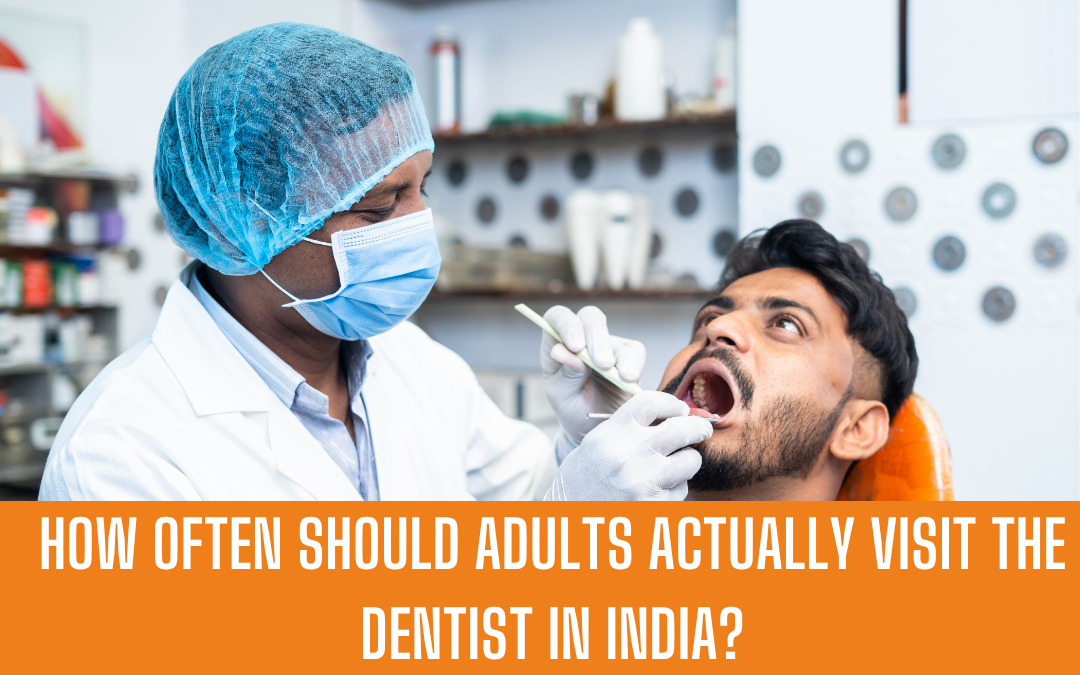
Six months is the short answer, and for plenty of adults it genuinely holds up. The right gap really comes down to your own mouth though, so healthy teeth with good habits behind them can often go a full year between visits, while anyone who gets cavities easily, has gum problems, smokes, or lives with diabetes will need checking far more regularly. In India that regularity counts for more than people admit, since decay and gum disease are widespread here and tend to go untreated until they start to hurt.
According to Dr. Swapnil Bhagwat at Age Concepts, a dental clinic in seawoods, “the people who only come in once it hurts are nearly always the ones who need the most work, because whatever we could’ve sorted in one short visit has had months to turn into something bigger.”
How often should adults see a dentist?
There’s no single number that fits everyone, though six months is where most dentists start.
- Low risk: strong teeth, healthy gums, and a decent brushing habit usually mean once a year is fine, and pushing for more than that often changes very little.
- Higher risk: cavities that keep coming back, ongoing gum disease, smoking, or diabetes all shorten the gap, sometimes down to every three or four months.
- The middle: most people sit somewhere between the two, and six months tends to land right for them, roughly the time it takes for trouble to start building unnoticed.
- It moves: your ideal gap isn’t fixed, it shifts as your mouth does, so a dentist adjusts it rather than sticking to one rule for life.
Whatever the gap, the heart of most visits is a plain oral prophylaxis, the cleaning that lifts the plaque your brush keeps missing.
What happens if you skip dental visits?
Most dental trouble builds in silence, and that’s the real reason long gaps hurt you.
- Decay grows: leave a small cavity unchecked for a year or two and it can work its way to the nerve, turning a quick filling into a much bigger job.
- Gums give way: caught early, gum inflammation reverses easily, but ignore it long enough and the bone underneath starts going, and that part doesn’t come back.
- Bills grow: the work neglect leads to, root canals, crowns, the odd extraction, costs many times what a cleaning would have.
- Quiet threats: some of the serious stuff, oral cancer included, barely shows itself early on, and catching it is half the point of a regular look.
Gum disease especially tends to creep in between visits, so knowing when bleeding gums mean more than hard brushing is worth your while.
Why Choose Age Concepts for Healthy Teeth ?
Dr. Swapnil Bhagwat has over 15 years behind him in clinical dentistry and a Gold Medal from MARDC, Pune, and he works mainly in preventive and restorative care, with the kind of unhurried manner that settles even patients who’ve put the dentist off for years.
The whole idea here is that early, low-key dentistry beats the expensive, painful sort every time, so each visit gets treated as a real check rather than a glance, and your recall gap is set by your own risk instead of a blanket six-month rule for everyone. Call +91 9860782782 to book your consultation.
📞 +91 9860782782.
Schedule a consultation with Age Concepts to find out exactly how often should you visit the dentist to maintain healthy teeth?
FAQ's
1. Is a check-up every six months really needed?
For many adults yes, though lower-risk people can often go a full year.
2. How often should kids see a dentist?
Roughly every six months, since their teeth are still growing in.
3. Is it fine to skip visits if nothing hurts?
No, plenty of dental problems stay painless until they’re already serious.
4. What actually happens at a routine check-up?
The dentist checks your teeth and gums, then usually cleans off plaque and tartar.